
The FIRE acronym bundles two separate goals into one label. Financial independence is a number — the point at which your invested assets can sustain your spending indefinitely without requiring active income. Early retirement is a decision — choosing to stop working. Most FIRE content treats these as the same thing. They are not, and separating them changes what the pursuit looks like and who it is realistically available to.
What financial independence actually means
Financial independence means your portfolio could sustain your current spending for the rest of your expected life at a safe withdrawal rate — typically 3.3 to 4% per year depending on retirement length. It does not require you to stop working to be meaningful. The moment you reach it, your relationship with employment changes permanently: you are there because you choose to be, not because the income is required. That distinction changes how you interact with your job, your employer, and your career risk tolerance in ways that are difficult to overstate.
This is meaningfully different from traditional retirement saving, where the plan is built around a mandatory endpoint — the age at which you can finally afford to stop. FIRE differs from traditional retirement planning precisely because it decouples financial sufficiency from a fixed age — and, when understood correctly, it also decouples it from employment status.
Why many people reach FI and keep working
A significant portion of people who reach financial independence do not retire. Many continue in their careers at full capacity; others shift to part-time or contract arrangements; some start businesses they had deferred during the accumulation years. What they share is that work is now optional rather than obligatory. What people actually do after early retirement is more varied than the FIRE label implies — many are still working in some form, simply on their own terms.
The reasons for continuing to work after FI are varied and mostly personal: professional identity, social structure, sense of purpose, keeping options open, genuine enjoyment of the work itself. None of these is a failure to commit to the financial goal. Reaching FI first changes the quality of any subsequent work, because it removes financial pressure from every career decision. You can take a pay cut to move to more meaningful work. You can leave without another role lined up. You can decline a promotion that would make you miserable. These are not small freedoms.
The middle paths between employment and full retirement
Between full financial independence and traditional employment, there are intermediate positions worth understanding. CoastFI is the point at which you have enough invested that, without any further contributions, the portfolio will grow to your full retirement number by a conventional retirement age — meaning you only need to earn enough to cover current expenses, not fund the future. BaristaFI is a related concept: a partial portfolio covers most expenses, with part-time or flexible work covering the remainder.
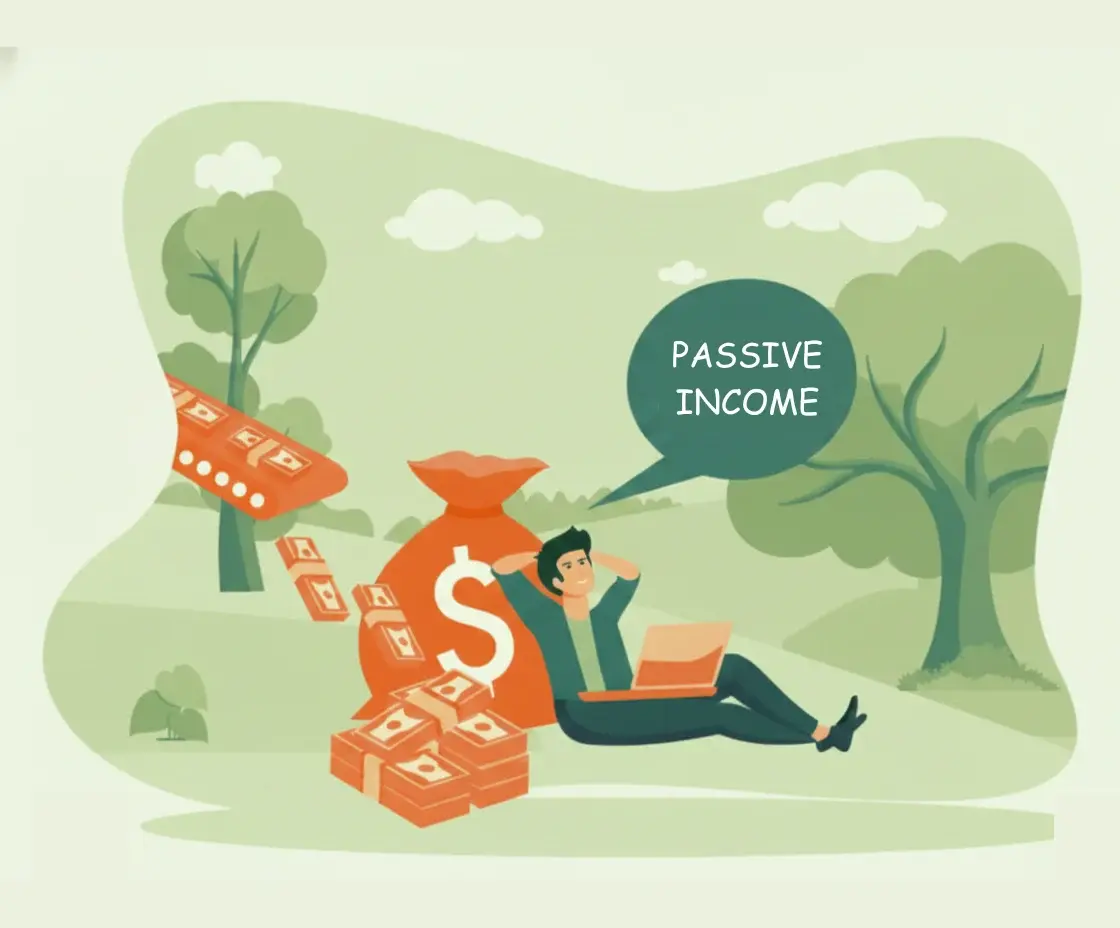
Both involve a degree of financial independence without full early retirement. They are particularly relevant for people who cannot project a clear path to full FI in a near-term timeframe, or who find full early retirement psychologically unappealing. Reaching CoastFI is a real and meaningful milestone that genuinely changes the nature of required work, even if full retirement is not imminent. Building passive income streams alongside a salaried role is one of the practical ways to reach these intermediate states faster, by reducing the proportion of expenses that require active income.
What FI buys you without retirement
The practical value of financial independence without early retirement is difficult to quantify but easy to recognise. You stop taking work you dislike because it pays well. You stop tolerating poor management because you cannot afford to leave. You stop deferring career risks — starting something, moving sideways, taking a sabbatical — because the financial floor is already in place. Building income streams alongside salaried work is one way to accelerate the path to this state without requiring full retirement first.
The financial difference between FI and not-FI is the same whether you retire or not. What changes is everything around the financial decision — negotiating power, risk tolerance, career direction, and the daily experience of work itself. As Investopedia's FIRE overview explains, the movement has always been broader than just quitting — the retirement component is optional.
How to know when you have crossed the FI line
The FI line is crossed when your invested assets multiplied by your chosen withdrawal rate equals or exceeds your annual spending. At a 4% rate, that is 25 times annual expenses. At a more conservative 3.3% — appropriate for a very long horizon — it is 30 times. The calculation does not change depending on whether you retire. You cross it when the number is there, regardless of what you decide to do the following day. Use the Future Free tool to calculate where you currently sit relative to your own FI line and how far you have to go to reach it.
Conclusion
Financial independence and early retirement are not the same goal. FI is a financial threshold; ER is a lifestyle choice. Reaching FI is worth pursuing regardless of whether retirement follows, because it permanently changes the terms on which you work. For many people, the most honest version of FIRE is reaching financial independence and then deciding what they actually want to do — which is often not a full stop on work, but a complete restructuring of how, why, and for whom they do it.
Disclaimer
The withdrawal rate figures used in this article are based on long-run historical modelling and are not guaranteed. Individual circumstances vary. Nothing here constitutes financial or investment advice. Consult a qualified financial advisor before making financial independence or retirement planning decisions.
Key Takeaways
- Financial independence and early retirement are separate goals — FI is the financial threshold, ER is the lifestyle decision that may or may not follow.
- Reaching FI without retiring changes negotiating power, career risk tolerance, and the daily experience of work in ways that are immediate and permanent.
- CoastFI and BaristaFI are intermediate states where partial FI reduces required work without requiring full retirement.
- The FI line is crossed when invested assets at your chosen withdrawal rate equal or exceed annual spending — the decision to retire is separate from this calculation.
Ready to Calculate Your FIRE Number?
Use our free FIRE calculator to get your personalized financial independence roadmap and 24-month action plan.
Calculate Your FIRE Number Now