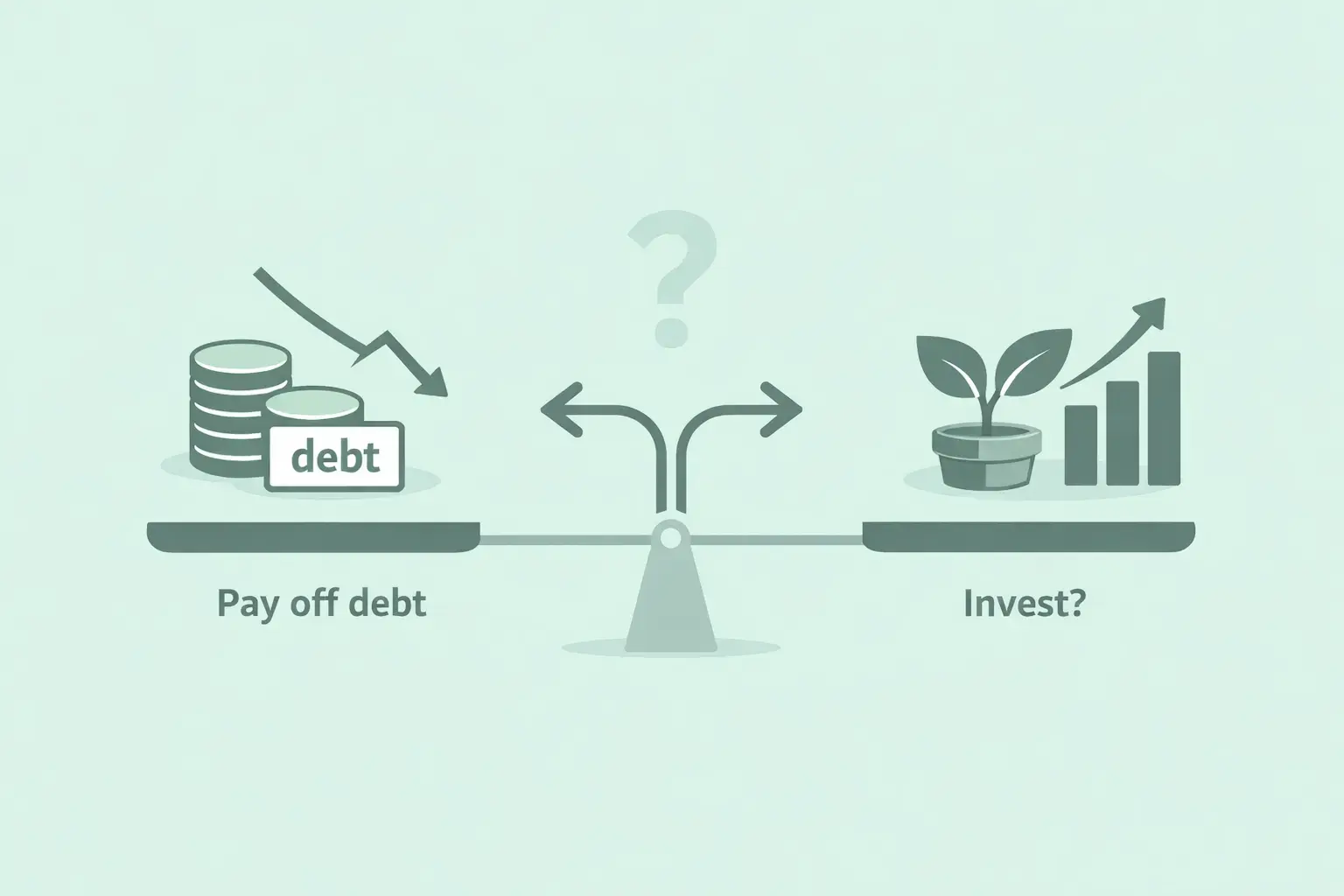
You want to reach financial independence, but you also have debt. Should you pay off loans first or invest for FIRE? The answer is not the same for everyone. It depends on the type of debt, the interest rate, and whether you already have a basic safety net. This article explains a simple order of operations that works regardless of where you live or which currency you use: when to prioritise debt payoff, when investing can run alongside it, and how to avoid the mistakes that slow down both.
Why the Order Matters
Money directed at debt cannot compound in investments, and money in investments is not reducing what you owe. The order in which you do things changes how fast you build wealth and how much risk you carry. High-interest debt grows quickly and can wipe out investment gains; low-interest debt may be manageable while you invest. Separating high-cost debt from low-cost debt, and building a small buffer first, is what determines which path to take.
High-Interest Debt First
Credit cards, personal loans, and other debt that charges 15% or more per year should usually be paid down before you focus on investing. The reason is simple: you are unlikely to earn a steady, after-tax return higher than that in the market. So paying off high-interest debt is often the best "return" you can get. Every extra payment reduces future interest and frees up cash flow for saving and investing later. Credit card debt in particular can spiral, clearing it first stops the bleed and puts you in control.
If you have multiple high-interest loans, target the one with the highest rate first (avalanche method), or the smallest balance if you need a quick win to stay motivated (snowball method). Either way, avoid adding new high-interest debt. New purchases on a card that you do not pay in full each month will undo your progress.
The Role of an Emergency Fund
Before you put every spare amount into debt payoff or investments, set aside a small emergency fund. Without it, any unexpected expense can force you back into high-interest borrowing or selling investments at a bad time. Starting to invest without an emergency fund is dangerous, and the same logic applies when you are paying off debt. A modest buffer, e.g. one to three months of essential expenses, gives you breathing room. Once that is in place, you can aggressively pay high-interest debt and then ramp up investing.
Low-Interest Debt: When Investing Alongside Makes Sense
Not all debt is equal. A mortgage or education loan at 8–10% may have a lower effective cost than the long-term return you might expect from a diversified portfolio. In that case, many people choose to invest while continuing to pay the loan as per the schedule. You get the benefit of compounding on investments and still reduce debt over time. The risk is that you must stay disciplined: do not use "I have a mortgage" as an excuse to skip investing, and keep total debt service under control so that monthly loan payments do not cross a healthy share of your income.
A practical rule of thumb: if the after-tax interest rate on the debt is clearly higher than the long-term return you expect from investments (after tax), prioritise payoff. If it is lower, you may invest while paying the loan, but only if you already have an emergency fund and no high-interest debt. Some research uses a threshold around 6% for when to pay down debt first versus investing; your situation may vary with tax treatment and risk tolerance.
A Simple Sequence for FIRE
A sequence that works for many people:
- Build a small emergency fund (one to three months of essentials).
- Pay off high-interest debt (credit cards, personal loans) before increasing investments.
- Once high-interest debt is gone, invest regularly while managing any remaining low-interest debt.
- Avoid new high-interest debt; keep total monthly debt payments within a sustainable share of your income.
This order protects you from shocks, stops the highest-cost leakage first, and then lets your money work for you in the market. Investopedia’s guide on paying off debt or investing extra cash and Fidelity’s pay down debt vs invest outline similar logic. Your exact timeline depends on how much debt you have and how much you can put toward payoff or investing each month.
Mistakes That Slow You Down
Paying only minimums on high-interest debt while investing can feel like you are "doing both," but the interest on the debt often outweighs investment gains. Investing before you have any emergency fund can force you to sell in a crisis. Taking on new lifestyle debt while trying to pay off old debt keeps you stuck. To move forward, focus on the sequence above and track your expenses so you know where your money goes and can direct it toward debt payoff or investing. Keep new debt off the table.
How This Fits Your FIRE Plan
Your FIRE number tells you how much you need to be financially independent. Reaching it usually requires a high savings rate and consistent investing. Debt payoff is not separate from that plan: it is the step that frees up cash flow so you can save and invest more. Clearing high-interest debt early increases the amount you can put toward your FIRE goal every month. So the right order is not "debt or invest," it is "emergency fund, then high-interest debt, then invest," with low-interest debt often running alongside investing.
Conclusion
High-interest debt should come before investing; low-interest debt can often coexist with investing once you have a small emergency fund. Build the buffer, clear the costly debt, then invest consistently. That order keeps you safe and puts your money to work in the right sequence.
Disclaimer
The information in this article is for educational purposes only and does not constitute financial or investment advice. All figures and calculations are illustrative. Consult a qualified financial advisor before making any financial decisions.
Key Takeaways
- High-interest debt (e.g. credit cards) should be paid off before focusing on investing.
- Build a small emergency fund first, then clear costly debt, then invest consistently.
- Low-interest debt (e.g. some home loans) can often run alongside investing.
Ready to Calculate Your FIRE Number?
Use our free FIRE calculator to get your personalized financial independence roadmap and 24-month action plan.
Calculate Your FIRE Number Now