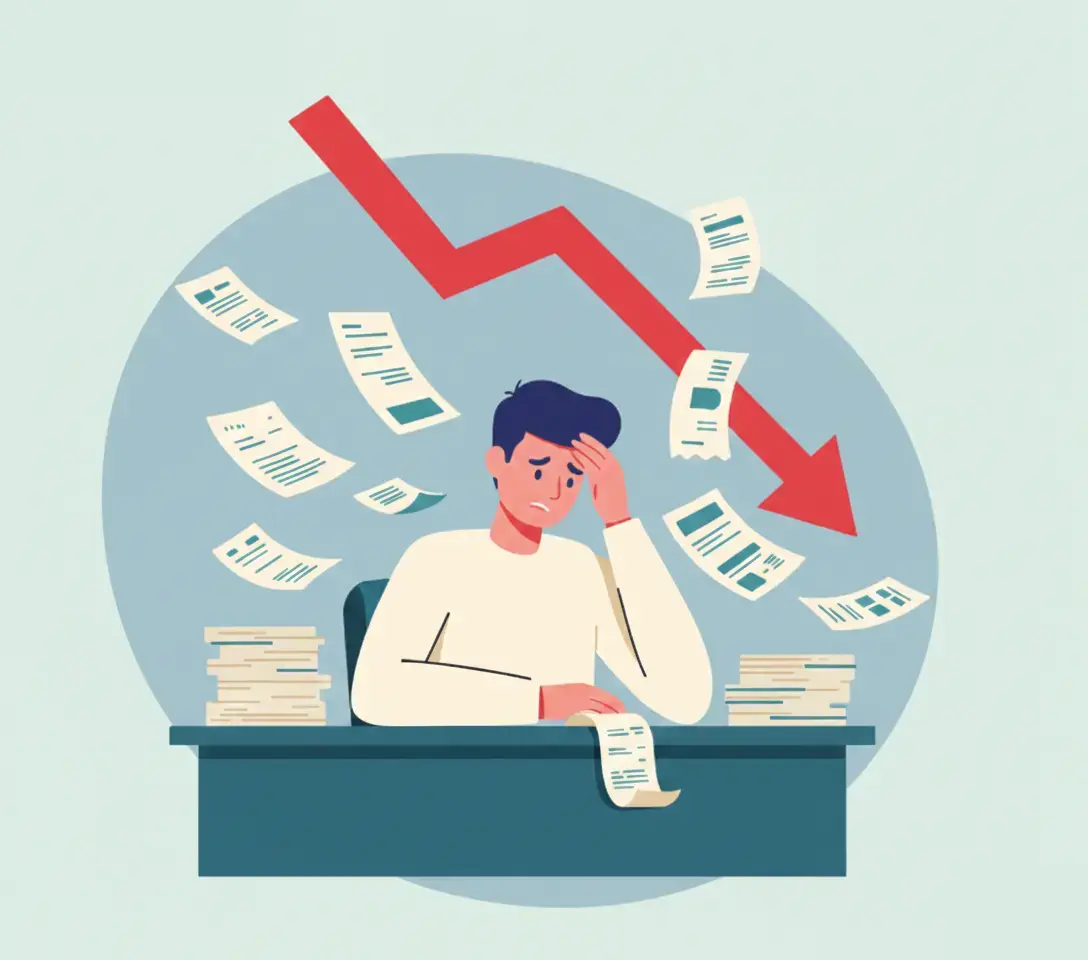
Market volatility triggers fear. When prices fall, the natural reaction is to sell and "cut losses", but that emotional response often destroys long-term wealth instead of protecting it. Panic selling locks in losses, misses recoveries, and disrupts compounding. This article explains why panic selling happens, what it costs, and how to build the discipline that separates successful long-term investors from those who lock in losses at the worst possible time.
The Emotional Trap
Understanding why this happens is the first step toward building the discipline that separates successful long-term investors from those who lock in losses at the worst possible time.
Here's what actually happens when you panic sell:
- You lock in the loss the moment you sell. What was a paper loss becomes a real, permanent loss.
- You miss the recovery when prices bounce back. Markets have historically recovered from every major drawdown.
- You turn a temporary paper loss into a permanent real loss. Time and compounding can repair paper losses; they cannot repair sold positions.
- Repeated panic selling compounds the damage. Each cycle of sell-low, buy-high erodes your capital and your confidence.
Why It Happens
Buying stocks without analysis using tips, rumors, or no research means you don't know the company, its business model, financials, management, or growth prospects. When the price drops, you have no anchor. That uncertainty leads directly to panic selling. Do you know why? When you don't understand what you own, every dip feels like a hell. To go deeper on this, read the blog on investing without analysis and get more insights from it.
The Compounding Cost
Every panic sale does more than lock in a single loss. It disrupts your entire wealth-building process.
Every panic sale:
- Locks in losses that might have been temporary.
- Misses future gains when the market or the stock recovers.
- Disrupts compounding, because the money that could have grown is no longer invested.
- Delays financial goals, sometimes by years.
- Reduces long-term returns, as study after study shows that the average investor underperforms precisely because of poor timing, selling low and buying high.
Historical Evidence
Market history consistently shows a few truths:
- Corrections and crashes are temporary. Markets have always recovered, though the timeline varies.
- Markets recover and grow over the long run. Equities have historically rewarded patient investors.
- Long-term investors who stay the course are rewarded. Those who panic sell crystallize losses.
- Panic sellers lose out. They sell at low points and often re-enter at higher points.
- Time in the market beats timing the market. Staying invested through volatility has, historically, been more profitable than trying to avoid every dip.
The COVID crash in March 2020 is an best example. Fear of the pandemic and uncertainty about the future led many to sell at the bottom. Those who sold locked in heavy losses. Those who stayed invested or buy more stocks, saw a sharp rebound and often gained significantly from the recovery. The lesson: panic selling locks in losses; staying disciplined allows time and recovery to work in your favor.
The Psychology Behind Panic Selling
Panic selling is driven by deep psychological biases. Recognising them helps you resist the urge to sell when market falls.
Panic selling is driven by:
- Fear of further losses - The brain reacts more strongly to potential loss than to potential gain.
- Loss aversion bias - We feel the pain of a loss more than the joy of an equivalent gain in future.
- Short-term thinking - We focus on today's drop instead of the long-term trend.
- Media sensationalism - Headlines amplify fear and urgency.
- Herd mentality - When everyone seems to be selling, the pressure to follow is intense.
Building Discipline
To avoid panic selling, you need systems and habits that keep emotion in check.
To avoid panic selling:
- Understand market cycles. Drawdowns are normal. Knowing that helps you stay calm.
- Focus on long-term goals. Remind yourself why you invested and what horizon you're investing for.
- Ignore short-term noise. Turn off the ticker during volatile periods if it helps.
- Have an emergency fund. When you know you can cover emergencies without touching investments, you're less likely to sell in a panic.
- Stick to your investment plan. Write it down. Revisit it when markets are calm. When volatility hits, follow the same plan instead of your emotions.
The SIP Advantage
Systematic Investment Plans (SIPs) are one of the most effective tools for reducing emotional decisions.
SIPs help:
- Automate investing so you don't have to decide when to buy.
- Remove emotion from decisions. You invest the same amount on a fixed schedule regardless of market levels.
- Buy more when prices are low, which can improve your average cost over time.
- Average out costs over many months and years, smoothing the impact of volatility.
- Build discipline by making investing a habit rather than a reaction to headlines.
If You've Panic-Sold Before
If you've sold in a panic before, you're not alone. The important thing is to learn from it and stop doing it again.
Consider:
- Learning from the experience. What triggered the sale? What would you do differently?
- Creating a written investment plan. Define your goals, time horizon, and what you will and won't do when markets fall.
- Setting up automatic investments so that you continue investing through downturns.
- Building an emergency fund so that you never have to sell investments to cover unexpected expenses.
- Focusing on long-term goals so that short-term volatility feels less threatening.
The Wealth Connection
Wealth is built by staying invested through volatility, letting compounding work, and making decisions based on your plan rather than headlines. Your future self will thank you for avoiding panic selling and staying the course.
Why need to create a written investmentplan?
One of the most effective ways to avoid panic selling is to write down your investment plan before volatility hits. Define your goals, time horizon, and what you will and will not do when markets fall. For example: "I will not sell based on a single day's drop or a headline. I will only reconsider my holdings if the fundamental research for each investment has changed." When the next correction or crash comes, refer to your plan instead of your emotions. A written plan safeguard you from panic selling, even though your fear is high.
Stay away from the market
Constant checking of portfolio values can amplify anxiety and trigger impulsive decisions. If you find yourself checking prices multiple times a day during volatile periods, consider limiting how often you look at the market. For example, once a week or once a month. Focus on your plan and your long-term goals rather than short-term swings. Stay away from the market, which does not mean ignoring your investments, it means not letting daily noise affect your investment decisions.
The Average Investor Trap
Studies repeatedly show that the average investor underperforms the market, not because they pick bad stocks, but because they buy high and sell low. They pour money in when market at high, and pull money out when markets are fearful. Panic selling is a major reason for that underperformance. Avoiding panic selling by having a plan, an emergency fund, and conviction in what you own, puts you ahead of the average. You do not need to be a genius; you need to avoid the most common and costly mistake: selling in a panic.
When Volatility Returns
Volatility will return, corrections and crashes are a normal part of market history. When they do, your preparation will determine whether you protect your long-term wealth or sacrifice it to short-term fear. Build discipline now: have an emergency fund, a written plan, and conviction in what you own. When the next downturn comes, you will be ready to stay the course instead of panic-selling at the bottom.
The Long-Term Mindset
Wealth is built by staying invested through volatility, letting compounding work, and making decisions based on a plan rather than fear. Every time you resist the urge to panic-sell, you protect not only your current portfolio but your future compounding. The largest gains often appear in the later years; selling early locks you out of those gains.
Do not wait for a crash to build discipline. Build it now, have an emergency fund so you never have to sell investments to cover expenses, write down your plan so you can refer to it when fear is high, and focus on your long-term goals so that short-term volatility feels less threatening. When the next correction or crash comes, and it will your preparation and mindset will determine whether you protect your long-term wealth or sacrifice it to short-term fear.
Conclusion
Panic selling is one of the biggest wealth destroyers. It turns temporary paper losses into permanent real ones and breaks the compounding chain. Build discipline, maintain an emergency fund, stick to a plan, and let time work for you.
Disclaimer
The information in this article is for educational purposes only and does not constitute financial or investment advice. All figures and calculations are illustrative. Consult a qualified financial advisor before making any financial decisions.
Key Takeaways
- Panic selling locks in losses and can mean missing the recovery.
- Market drops are normal; staying invested has historically rewarded patience.
- Stick to your plan and avoid making decisions based on short-term fear.
Ready to Calculate Your FIRE Number?
Use our free FIRE calculator to get your personalized financial independence roadmap and 24-month action plan.
Calculate Your FIRE Number Now