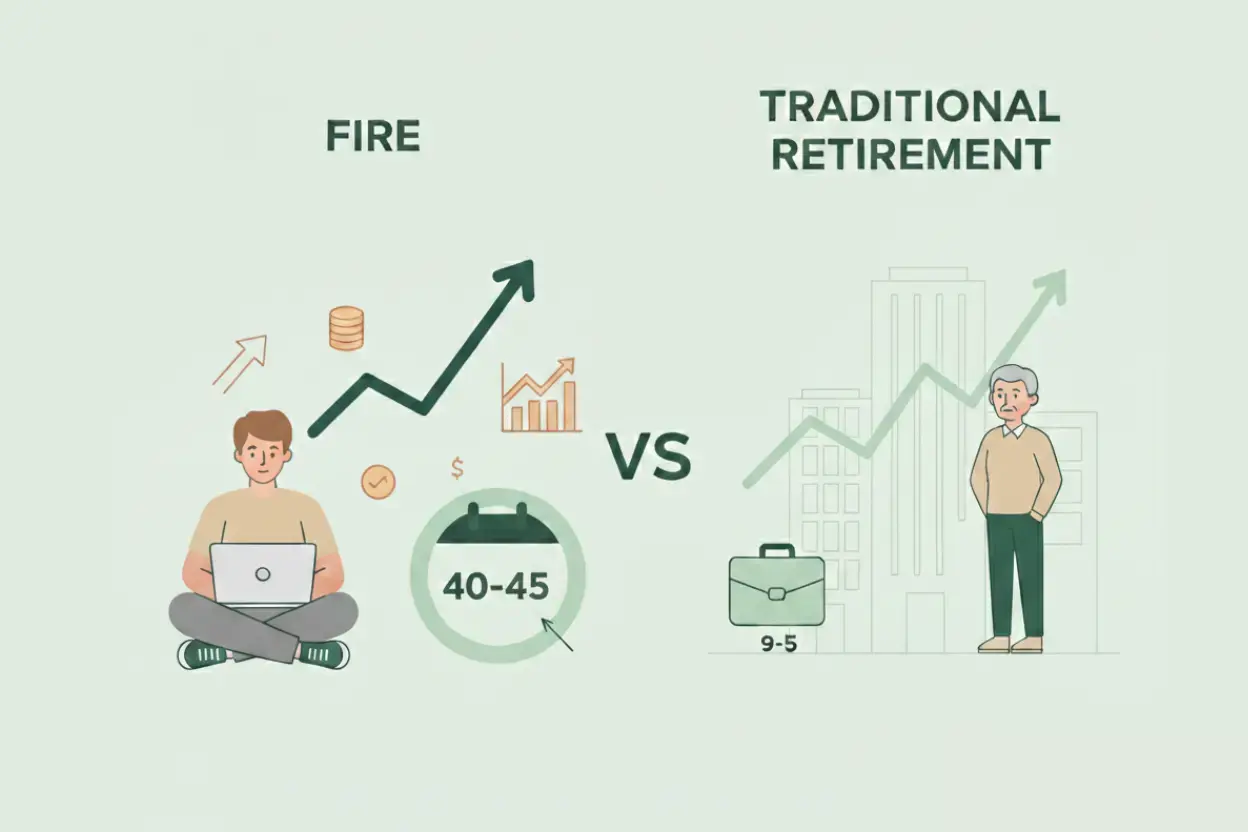

Building the corpus is the problem most FIRE content addresses. The withdrawal phase gets far less attention, even though this is where the plan can actually fail. A portfolio that grows well during accumulation can be depleted far faster than expected if withdrawals are handled poorly — particularly in the first five to ten years of retirement. Understanding how to take money out of your investments is as important as understanding how to put it in.
What the 4% rule says — and what it does not
The most widely cited withdrawal guideline is the 4% rule, which states that withdrawing 4% of your starting portfolio value each year, adjusted for inflation, has historically kept a portfolio intact for 30 years. The Trinity Study research that produced this figure tested it against market data going back nearly a century. The 30-year horizon is important: the rule was designed for conventional retirement ages, not 40-year or 50-year early retirements. For a 40 to 50-year retirement, a starting rate closer to 3.3 to 3.5% provides more historical resilience.
The rule also assumes you take the same inflation-adjusted amount every year regardless of what the market is doing. This is simple but rigid. A bad market year feels very different when you are withdrawing from a shrinking portfolio than when you are contributing to a growing one — and the financial consequences of rigid withdrawal during a downturn are far worse than most people anticipate before they retire.
The biggest withdrawal risk: sequence of returns
The order in which returns occur matters enormously when you are withdrawing money. A portfolio that drops 30% in the first two years of retirement, then recovers strongly, ends up in a far worse position than one that drops 30% in year twenty. The early losses are compounded by withdrawals: you sell more units when prices are low to fund the same living expenses, leaving fewer units to participate in the recovery. This is sequence of returns risk, and it is the primary mechanism by which FIRE plans fail despite a sound starting corpus.
The Early Retirement Now safe withdrawal rate series is the most thorough public analysis of this risk, testing hundreds of historical retirement scenarios across different starting conditions and asset allocations. The consistent finding across all scenarios: the first decade of retirement determines whether the portfolio survives the full horizon.
Fixed versus dynamic withdrawal: the practical difference
A fixed withdrawal takes the same inflation-adjusted amount every year. It is predictable and easy to budget around, but it ignores what the market is doing. In a severe downturn, it accelerates depletion by forcing asset sales at depressed prices.
A dynamic withdrawal adjusts the amount based on portfolio performance. In a strong year, you take a little more. In a weak year, you take less. This requires genuine spending flexibility — a willingness to cut discretionary costs during market stress — but significantly improves the probability of the portfolio lasting the full retirement horizon. The practical requirement is a budget built around two layers: a floor of essential spending that cannot be reduced, and a ceiling of comfortable spending with room to move between them.
The bucket strategy as a withdrawal framework
One of the most widely used withdrawal frameworks divides the portfolio into time-based buckets. The first bucket holds one to two years of living expenses in cash or very low-risk instruments. The second holds three to seven years of expenses in moderate-risk assets. The third holds the remainder in long-term growth assets.
During a market downturn, you draw from bucket one while the rest of the portfolio recovers without being touched. This removes the forced selling at low prices that sequence risk creates. The psychological benefit is also real: seeing a dedicated cash reserve for immediate expenses makes it easier to leave growth assets untouched during volatility. This is the same reason interrupted compounding costs so much — units sold during a crash are not available to compound during the recovery that follows.
What to sell first, and in what order
When withdrawing from a multi-asset portfolio, the order of liquidation affects both portfolio longevity and tax efficiency. The general principle: spend cash reserves first, then sell overweighted asset classes to rebalance, then draw from taxable accounts before tax-advantaged ones. The specifics vary by country and account type, but the underlying logic is consistent — preserve long-term growth assets for as long as possible.
The temptation when markets fall is to shift entirely to cash and wait for recovery. This converts temporary paper losses into permanent real ones, and typically causes the investor to miss the earliest, sharpest phase of the rebound. The fear of running out of money is one of the most common reasons people approaching or in early retirement hold excess cash — the same fear that drives one more year syndrome during accumulation. Both responses feel safe and both carry a real cost.
Building the withdrawal plan before retirement begins
The withdrawal strategy should be designed before the first day of retirement, not improvised under pressure afterward. The plan should specify: the starting withdrawal rate matched to the retirement horizon, the trigger that would cause withdrawals to be reduced, the liquidation order for different asset types, the size of the cash buffer, and the minimum spending floor. Having these decisions documented removes the emotional element from choices that would otherwise be made during market stress.
Conclusion
The accumulation phase builds the corpus. The withdrawal phase determines whether it lasts. A sound plan includes a starting rate matched to your retirement length, spending flexibility to adjust in poor market years, a liquid cash buffer to avoid forced selling, and a clear sequence for liquidating assets. Use the Future Free tool to understand how your current corpus maps to a sustainable withdrawal rate at your target retirement age.
Disclaimer
The withdrawal strategies discussed in this article are for educational purposes only. Actual outcomes depend on market conditions, asset allocation, spending patterns, and individual circumstances that vary widely. Historical research on withdrawal rates does not guarantee future results. Nothing here constitutes financial or investment advice. Consult a qualified financial advisor before making withdrawal or retirement planning decisions.
Key Takeaways
- The 4% rule was designed for 30-year retirements — early retirees with 40 to 50-year horizons should use 3.3 to 3.5% as a starting withdrawal rate.
- Sequence of returns risk is the primary mechanism by which FIRE plans fail: a severe downturn in the first five years of retirement causes lasting damage that later recoveries cannot fully repair.
- Dynamic withdrawal — reducing spending in bad market years — significantly improves portfolio survival odds compared to a fixed annual withdrawal.
- The bucket strategy separates short-term cash from long-term growth assets, preventing forced selling at depressed prices during market downturns.
Ready to Calculate Your FIRE Number?
Use our free FIRE calculator to get your personalized financial independence roadmap and 24-month action plan.
Calculate Your FIRE Number Now