Loans and EMIs are often necessary for big purchases, but when they grow beyond a sustainable level, they quietly drain your ability to save and invest. This article explains the hidden cost of debt, the 30% rule, and how to break the cycle so you can redirect cash flow toward wealth building.
The Hidden Cost of Debt
When you take a loan or purchase something on EMI, you are not just paying for the item, you are paying interest that compounds over time. That interest represents money that could have been invested and grown instead. Every month, a portion of your income goes to the lender instead of into your own savings or investments. Over years, that diverted cash flow adds up to a huge opportunity cost, the wealth you could have built if that money had been working for you.
Opportunity Cost
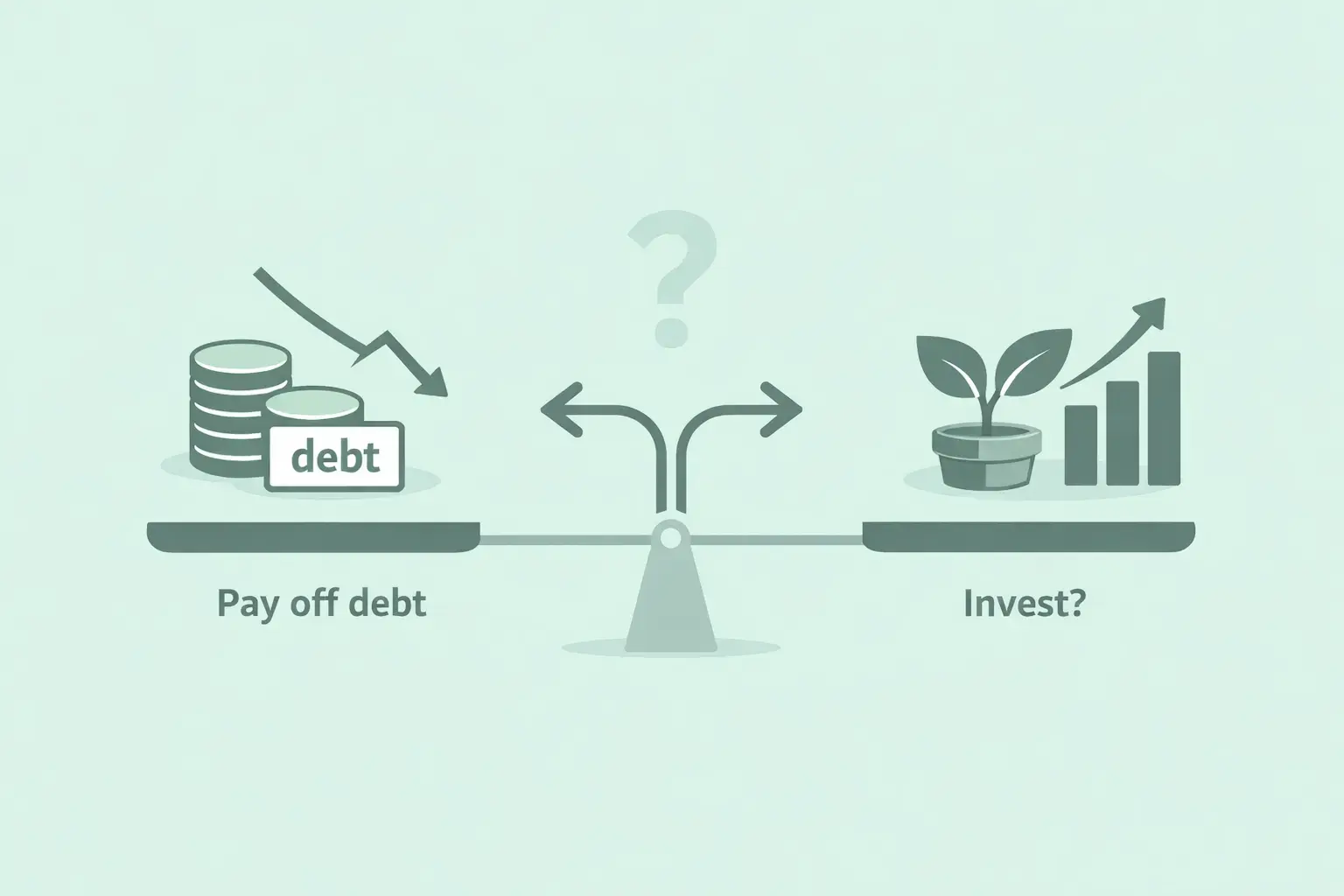
Every unit of currency you pay in EMI is money that is not working for you. While you are paying off debt, that same money could have been compounding in investments and building your wealth. The longer you carry debt, the more you lose in potential growth. Paying off high-interest debt is often the best return you can get, because you are effectively earning the interest rate you stop paying.
Real-Life Impact
Consider two people with the same income. One keeps total EMIs under 20% of take-home pay, saves and invests the rest. While saving money it's not enough, you need to invest to build wealth. The other lets EMIs creep to 45% and has almost nothing left for savings. After ten years, the first has a growing investment portfolio and an emergency fund. The second is still servicing debt with little to show for it. The gap in net worth comes directly from how much of their income went to lenders versus to their own future. Small differences in EMI ratio, sustained over time, create enormous differences in outcomes.
This does not mean you must never take a loan. It means every loan has a cost beyond the interest rate is the opportunity cost of not investing that cash flow. When you add a new EMI, you are not just committing to a monthly payment, you are giving up the chance to put that money into assets that could grow. So before you sign, ask: Is this EMI necessary? Could I save up and pay in full or with a smaller loan? What will my total EMI ratio be after this, and can I still save and invest enough?
The 30% Rule
When your total EMIs exceed 30% of your take-home income, you enter a danger zone. This threshold is not arbitrary, it is based on what is sustainable for financial health. Above 30%, your ability to save, build an emergency fund, and invest drops sharply. You become more vulnerable to any income shock or large unexpected expense, and you have little room to build long-term wealth.
When your EMIs exceed 30% of your income, you typically face:
- Severely limited ability to save. There is little left after essentials and debt.
- Difficulty building an emergency fund. Without a buffer, any shock can force more debt.
- Investment opportunities out of reach. Money that could grow is going to lenders.
- Rising financial stress. Living with little margin for error affects decisions and wellbeing.
Breaking the Cycle
The path to wealth creation requires reducing the debt burden and redirecting freed-up cash flow toward savings and investments. It does not happen overnight, but with a clear plan you can get there.
The path to wealth creation requires:
- Reducing your debt burden below 30% of income. Pay off high-interest debt first and avoid new lifestyle debt.
- Prioritizing high-interest debt repayment. Credit cards and personal loans usually cost the most.
- Avoiding new debt for lifestyle purchases. Differentiate between needs and wants, delay or save for wants, if not necessary, do not buy it.
- Redirecting freed-up cash flow to investments. As EMIs fall, channel the difference into an emergency fund and then into long-term investments.
Long-Term Impact
Debt does not just cost you today, it costs you your future. The money spent on interest could have been the seed for your financial independence. Every EMI payment delays your journey to financial freedom. Over a decade or two, the difference between a high-debt path and a low-debt, high-savings path becomes enormous. The earlier you reduce debt and increase savings, the more time compounding has to work in your favor, and try to build your passive income streams gradually, so that they can grow over time. You will be able to invest more money and achieve your financial freedom faster.
Practical Steps
Start by listing all your loans and EMIs. Add up the total monthly outflow and divide by your take-home income. If the ratio is above 30%, make a plan to bring it down. Target the costliest debt first, avoid new EMIs, and use windfalls or bonuses to prepay. As your EMI burden falls, build an emergency fund first, then start investing regularly. Consistency and patience matter more than speed.
Before You Take New Debt
Before taking any new loan or EMI, calculate what your total EMI ratio will be after adding it. If the new payment pushes you above 30%, think twice. Ask whether the purchase is necessary now or can be delayed until you have saved enough to reduce the loan amount. Consider alterantives like buying used, choosing a smaller variant, or waiting until you have paid off existing debt. Every new EMI you avoid today is money that can work for you instead of for the lender.
The Mindset Shift
Wealth building requires a shift in mindset, from "how much can I afford to borrow?" to "how much can I save and invest?" When you prioritize reducing debt and increasing savings, interest costs fall, more money goes to investments, and growth accelerates over time. The earlier you make this shift, the more your future self will benefit. Loans and EMIs are tools. Use them sparingly, stay below the 30% threshold, and redirect freed-up cash flow to wealth building.
When Debt Makes Sense
Not all debt is bad. A home loan at a reasonable rate. For example, may be necessary for many people, and if the EMI ratio stays below 30%, it can be manageable. The key is to avoid layering multiple EMIs (car, gadgets, lifestyle loans) on top of each other so that your total ratio creeps above 30%. If you must take debt, take one loan at a time, pay it down, and only then consider another. That way you keep your ratio under control and protect your ability to save and invest.
Conclusion
Loans and EMIs are necessary for some purchases, but they should be managed carefully. Keep your total EMI ratio below 30% of income, prioritize paying off high-interest debt, and redirect savings to wealth-building investments. Your future self will thank you for breaking the debt cycle and building wealth instead.
Disclaimer
The information in this article is for educational purposes only and does not constitute financial or investment advice. All figures and calculations are illustrative. Consult a qualified financial advisor before making any financial decisions.
Key Takeaways
- EMIs reduce the amount you can save and invest each month.
- High debt service delays or prevents financial independence.
- Prioritize high-interest debt payoff, then focus on saving and investing.
Ready to Calculate Your FIRE Number?
Use our free FIRE calculator to get your personalized financial independence roadmap and 24-month action plan.
Calculate Your FIRE Number Now